
My Story
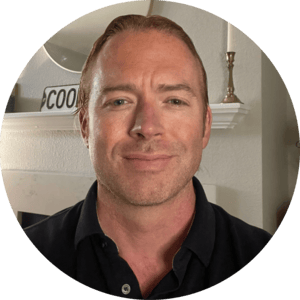
I survived and healed from religious and childhood Trauma.
As a Level 2 Internal Family Systems (IFS) Practitioner, I’ve had the honor of helping hundreds of people find relief from similar trauma.
I can help you along the same path. Check out what an IFS session sounds like. Link at the bottom of the page.
It has taken me many years to understand something: the churches I grew up in were filled with genuinely loving people, and at the same time, they were embedded within a system shaped by fear, control, and power.
I was raised in fundamentalist Christianity, and much of what I experienced there felt real and meaningful. I was known. I belonged. I felt cared for by the community, and at times I truly sensed the presence and love of something greater than myself. Those experiences mattered. They were not imagined, and they were not meaningless.
And yet, woven quietly into that warmth was a powerful system designed to regulate behavior through fear. Love and belonging were offered, but they were conditional. The message that “Jesus loves you” often came paired with graphic warnings of hell, eternal punishment, and separation. Devotion and terror lived side by side.
The same community that embraced me also demanded conformity. Questioning was framed as rebellion. Doubt was treated as danger. Over time, I learned that safety came not from authenticity, but from obedience.
Looking back, I now understand how these contradictions created what clinicians call trauma bonding—a cycle where care and threat coexist, binding a person emotionally to the very system that causes harm. The warmth felt like love, while shame, anxiety, and hypervigilance quietly accumulated in my body, eventually emerging as panic attacks.
What became clearer with time is that religious fundamentalism, as a system, is structured to protect itself. Individuals are secondary. Authority is elevated above vulnerability. In the churches I knew, leadership was exclusively male, and sermons emphasized certainty and moral clarity, while personal struggle remained hidden. Humanity was replaced with hierarchy.
My family, like many others, carried unspoken pain. We were subtly encouraged to keep that pain private in order to preserve the image of being a “good Christian family.” Appearance mattered more than healing. Childhood trauma went unnamed, while righteousness was performed.
The system was effective because it used my kindness and desire to serve. I gave my youth to missionary work, shaping my inner world around what I was told was God’s truth, until I realized the system’s deepest loyalty was to its own survival—not love or healing.
Eventually, I faced a choice: stay and disappear, or leave and rebuild.
Leaving burned everything down. Certainty collapsed. Relationships changed. And in the ashes, I found space to breathe and rediscover myself.
After years of healing from religious, emotional, and physical abuse, I now serve as a Level 2 Internal Family Systems (IFS) Practitioner, helping others heal trauma, reconnect with their inner wisdom, and reclaim the parts of themselves that were once silenced.
I no longer believe love and fear need to coexist.
And I believe healing begins when systems of control are named—without hatred, but with truth.
Hear What an IFS Session Sounds Like
Curious what this work actually feels like?
You’re invited to listen to a sample Internal Family Systems session featuring Nathan Cooley, Director of Deep Water Soul Care, as a guest on the popular podcast Holistic Health with Melissa Armstrong. This episode offers a real-life glimpse into how IFS gently helps people connect with and heal their inner child parts.
Spotify: https://open.spotify.com/episode/2O3Yx0gHxF7bzlj2Dtnq5U?si=LgOONmJ-SdaA0GIlz3ba6Q
Apple Podcasts: https://podcasts.apple.com/us/podcast/ep-46-why-trauma-lives-in-the-body-ifs-somatic/id1778991009?i=1000748373617